CONTACT
ENTERPRISE CLIENT PROJECT
On-Premise Healthcare AI Research Platform
Enterprise healthcare AI · Product strategy · Workflow design
An AI research platform designed for secure, private deployment within hospital environments.

Project Overview
This enterprise platform supports medical researchers in conducting AI-assisted research within a hospital-controlled environment. The product translates hospital research workflows, data-security requirements and AI capabilities into a structured platform that can be privately deployed for institutional use.
Role
Product Manager
Company / Client
Changjiang Yuntong · Renmin Hospital of Wuhan University
Team
Hospital stakeholders, product designers, engineers and AI specialists
Responsibilities
Stakeholder research, workflow definition, product requirements, platform planning, prototyping, roadmap management and cross-functional delivery coordination
01 Solution
We defined the product around a practical constraint: hospital data had to stay inside the institution. The resulting direction was an on-premise research workspace where clinical teams could prepare data, run experiments, compare models and keep a traceable record of the work.



02 Challenge
Hospital researchers needed to turn clinical questions into AI studies without moving sensitive data outside the institution. My design problem was to give clinical, research and technical roles one understandable workflow while keeping access, status and responsibility explicit.
03 Current Workflow
The existing path started with computing resources and a development environment, then split into data collection and cleaning on one side and model selection or self-development on the other. Teams trained and compared models, looped back to optimise them, and only then moved the best model into an application. The map exposed why progress was hard to track: infrastructure, data preparation and model work depended on one another, but were managed as separate activities.
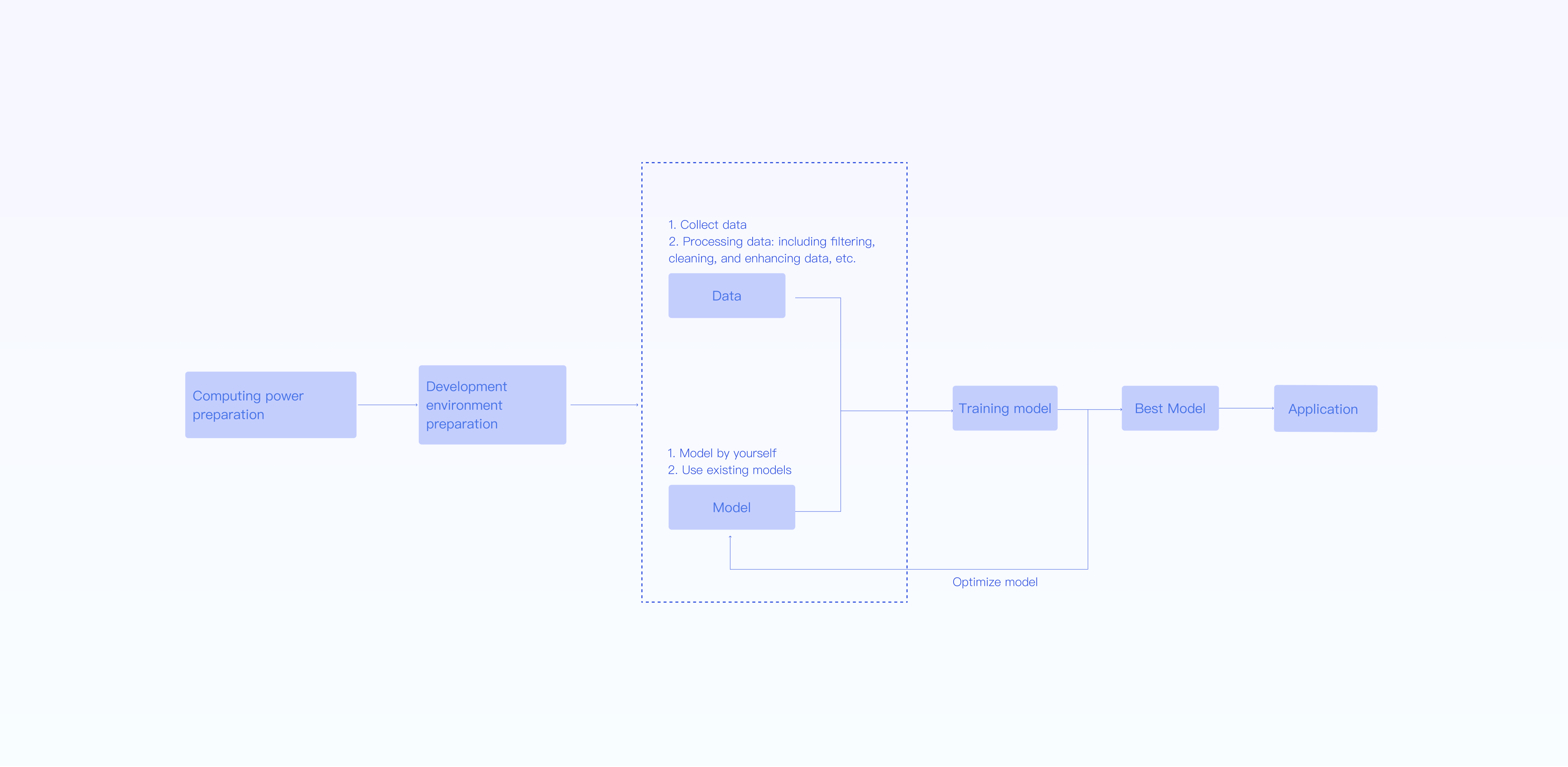
The existing workflow separates computing resources, data preparation and model development, making progress and ownership difficult to track across the study.
04 — Pain Points
Teams were piecing the work together across separate tools. Ownership blurred when a study moved from data preparation to model work, and few people could tell whether the data, environment or model was actually ready. These breakdowns—not the individual AI functions—became the focus of the product.

05 — Workflow Proposal
I centred the proposal on a shared project workspace. Every dataset, experiment and model belongs to a project; permissions show who can act; and status and history remain visible so collaboration does not erase technical traceability.

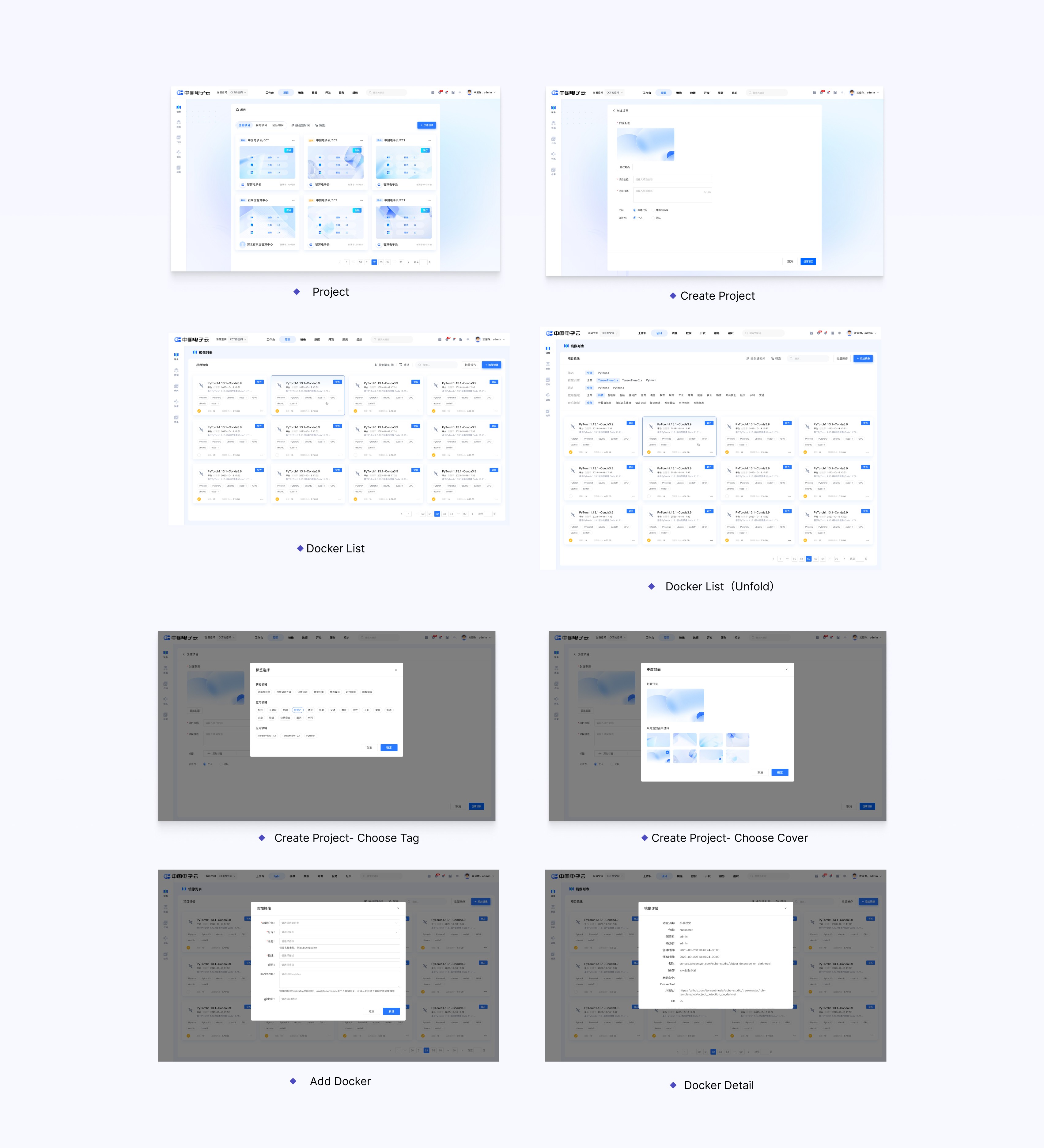
The platform brings research projects, computing resources and model workflows into one shared workspace.
06 Platform Concept
The platform concept organises work around research projects rather than isolated technical tools. Each project brings together its data source, team, experiments, models and results in one traceable workspace.

07 Feature List
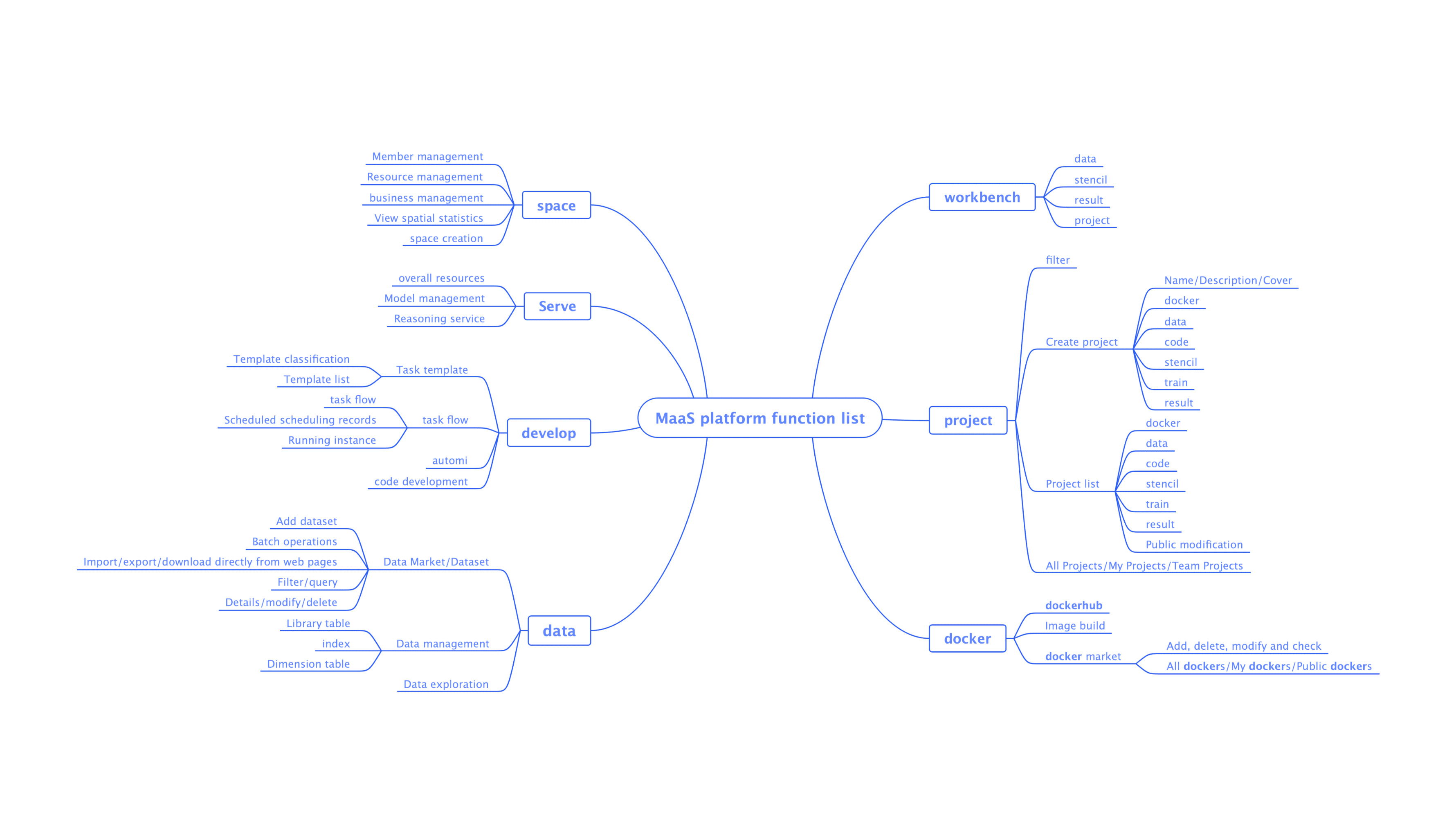
The function architecture grouped the platform into seven connected areas. Space manages members and shared resources; Data handles datasets and exploration; Develop supports templates, task flows and code; Serve manages models and inference services. Workbench brings data, stencils, results and projects into one working view, while Project keeps each study’s code, training and outputs together, and Docker manages the reusable environments needed to run them.
08 User Flow
The flow separates what model manufacturers, the platform and hospital users need to do. A model team uploads a customised Docker environment and dataset, builds a task flow and lets the platform run the pipeline; failed runs return to the log and task configuration, while successful runs produce a model and inference service for online testing. Hospital users can also upload an existing large model and publish an inference service in one step. This clarified where the platform had to guide setup, expose errors and hand a usable service to the clinical research team.

09 — Prototype
The workspace keeps permissions, datasets, code, runs, models and results inside the same project. Status, ownership and history appear where the work happens, so teams do not need a separate tool just to understand what is ready or blocked.
