CONTACT
INDUSTRY COLLABORATION
Enterprise healthcare · Professional experience · Service design
A professional-facing platform connecting CPAP device data with patient-reported context to support remote OSA care.

Project Overview
This project explored how patient-reported information could be integrated with CPAP device data in professional care workflows. The resulting platform concept helps respiratory therapists and sleep physicians interpret changes, prioritize follow-up and maintain a connected loop between patient reporting and professional review.
Role
UX Researcher & Product Designer
Company / Client
Philips · Sleep & Respiratory Care
Team
HTI&UX supervisor and patient-testing support
Responsibilities
Research, questionnaire design, interaction design, frontend prototyping, online user testing, qualitative synthesis and design iteration
01 Solution
Device data told professionals what had changed; patient reports supplied the missing why. I placed both in the same workspace so a respiratory therapist could scan cases, spot a meaningful change and decide whether to contact the patient, ask a DME provider to investigate or bring in a physician.

Categorized patient groups for faster case prioritization

Role-based dashboards for respiratory therapists and physicians

Patient overview combining CPAP data with reported experience
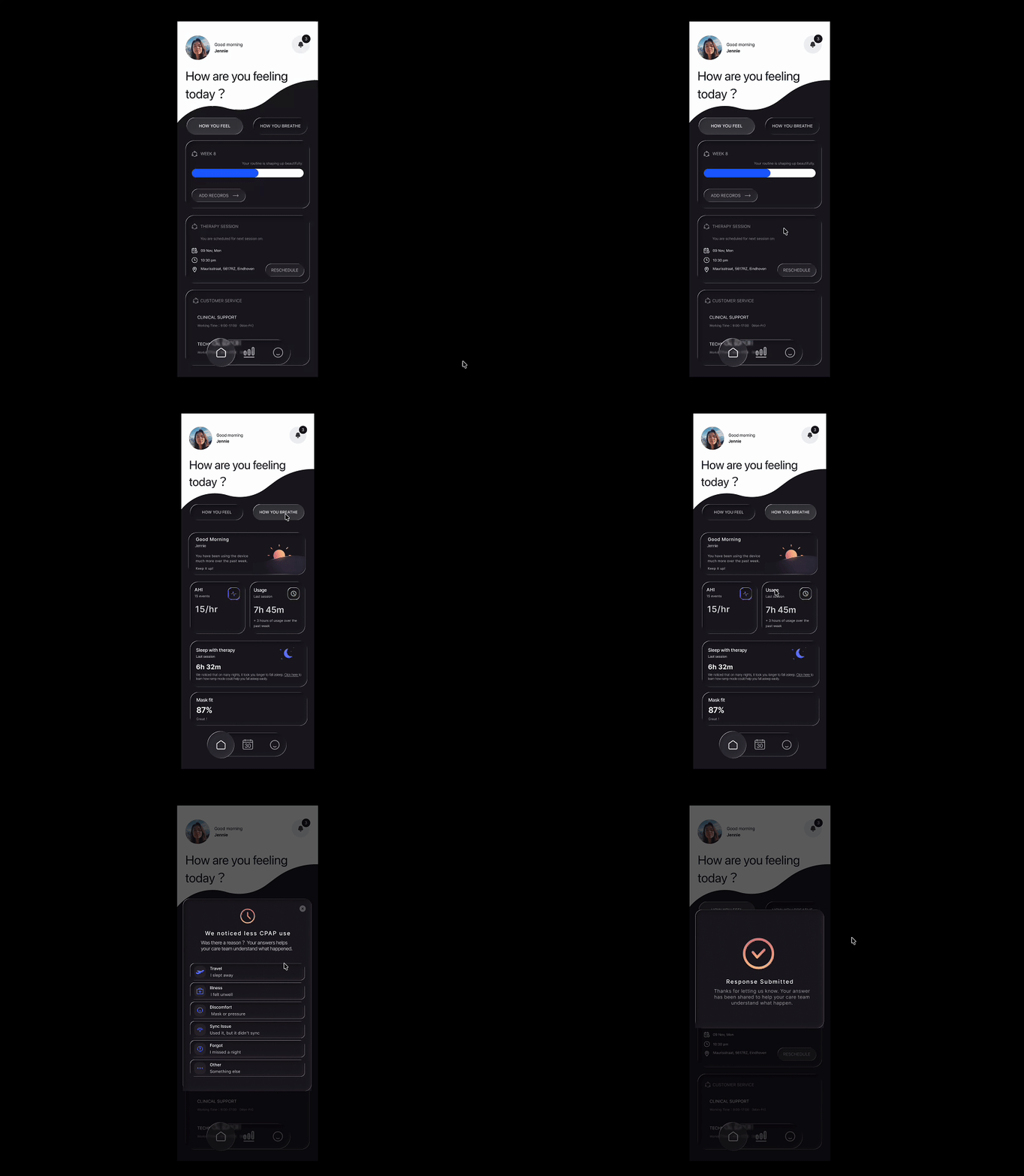
Usage-drop context helps explain changes in therapy behavior

From patient context to contact, escalation, and follow-up
02 Research and Design Process
The evidence came from four sources: 11 professional interviews, five patient interviews, a 20-participant online study and a review with three Philips experts. I organised the material around roles, treatment stages, workload and information flow, then used those patterns to decide what the platform needed to show.

Research through Design Process
From care workflow and user needs to role-based concepts and formative evaluation.
Professional interviews first mapped who reviews CPAP data, what decisions respiratory therapists and physicians make, and where context is lost. Patient interviews and the 20-person online study then tested how often people could realistically report fatigue, comfort and therapy impact. Finally, three Philips experts reviewed whether the resulting information could support professional triage and follow-up. Each stage narrowed the concept from a broad information gap to a specific weekly-plus-triggered reporting model.

From Evidence to System Concept
Research findings were translated into information flows, prototypes and role-based interfaces.
03 Care Workflow Analysis
The map follows care from symptom recognition and sleep testing to CPAP prescription, setup, nightly use and ongoing review. Once therapy begins, device metrics reach the professional platform; a respiratory therapist screens changes, contacts the patient when the cause is unclear, troubleshoots mask, device or behaviour issues, and escalates clinical patterns to a physician. Stable cases continue monitoring, while the physician can adjust treatment or arrange follow-up. This located patient reporting at the exact decision points where numbers alone could not explain what happened.

Mapping where patient context is created, lost and needed across the CPAP care workflow.
04 Service blueprint

Translating the care journey into patient touchpoints, professional actions and backstage system needs.
05 Connected Care Concept
The final model uses a weekly PLATO-11 check-in for continuity and short pop-ups when something changes, such as a sudden drop in use. Each response sits beside the relevant device data, so a professional can judge whether the likely cause is behavioural, clinical or technical.


From Metrics to Meaningful Feedback
Triggered questions collect additional context only when a change needs explanation.


From Standalone Reporting to Context-Aware Check-ins
Triggered questions collect additional context only when a change needs explanation.
06 Validation
Because the concept spans both patient and professional workflows, I reviewed it with three internal Philips experts. After a short walkthrough of the research and main problem, I used two representative scenarios and video prototypes to show how the concept would work in practice. We then discussed usability, cognitive burden, ease of recognition, preferences and potential risks.